148 species across 32 families. WoRMS-validated taxonomy with care parameters from multiple sources.
LPS vs SPS vs Soft Coral — Full Breakdown Table18 species matching filters
Anacropora
Delicate branching SPS. Similar care to Montipora but slower. Nice accent coral.
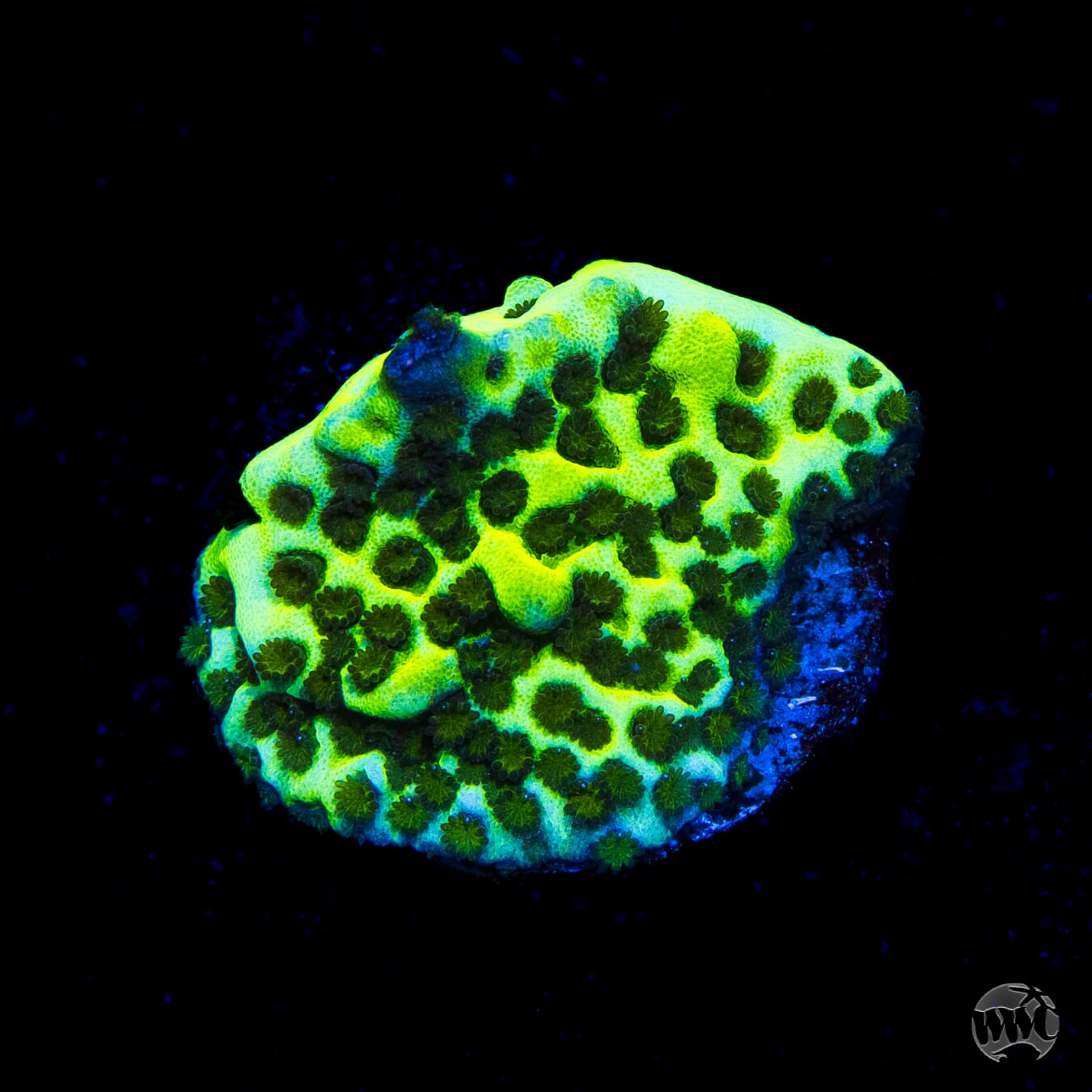
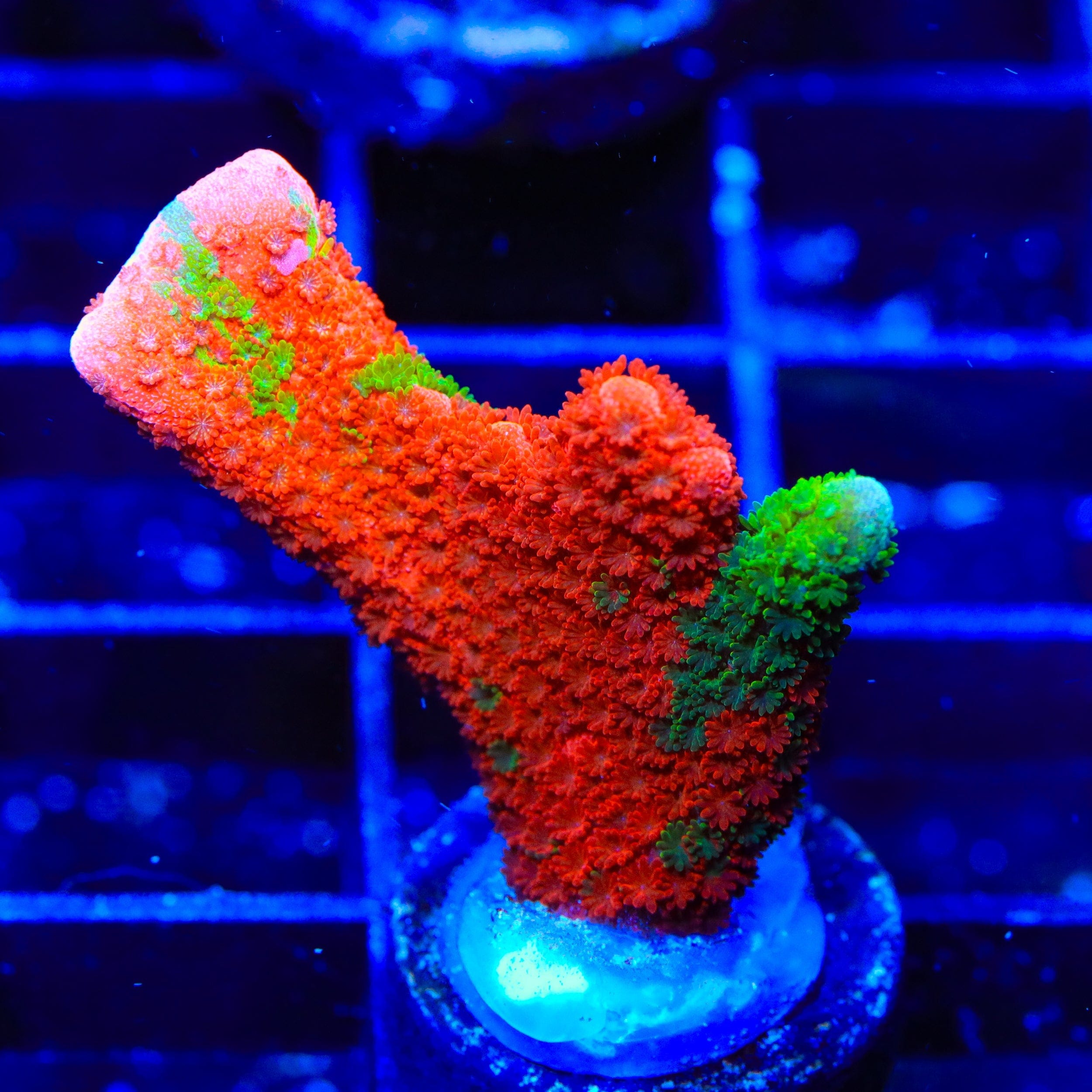
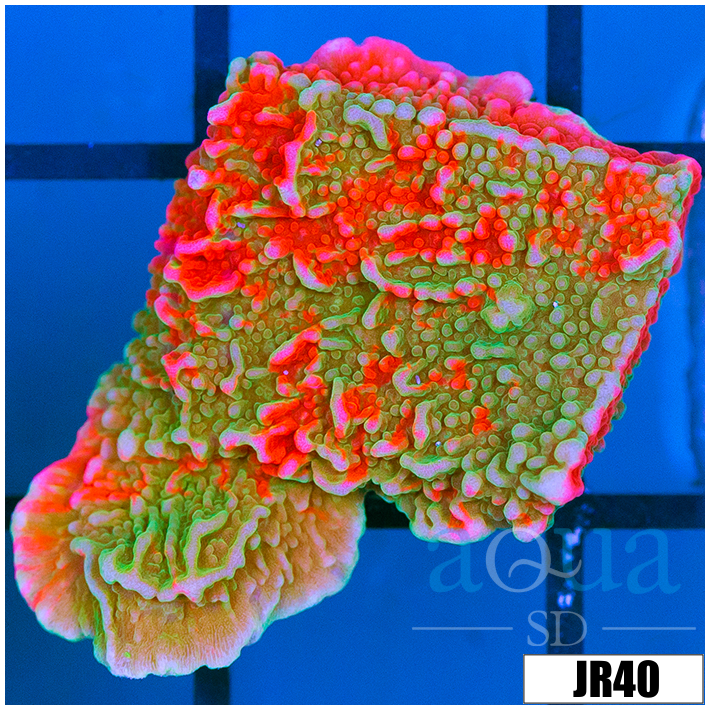
Encrusting Monti
Encrusting form with porous texture. Spreads across rock — easy starter SPS.
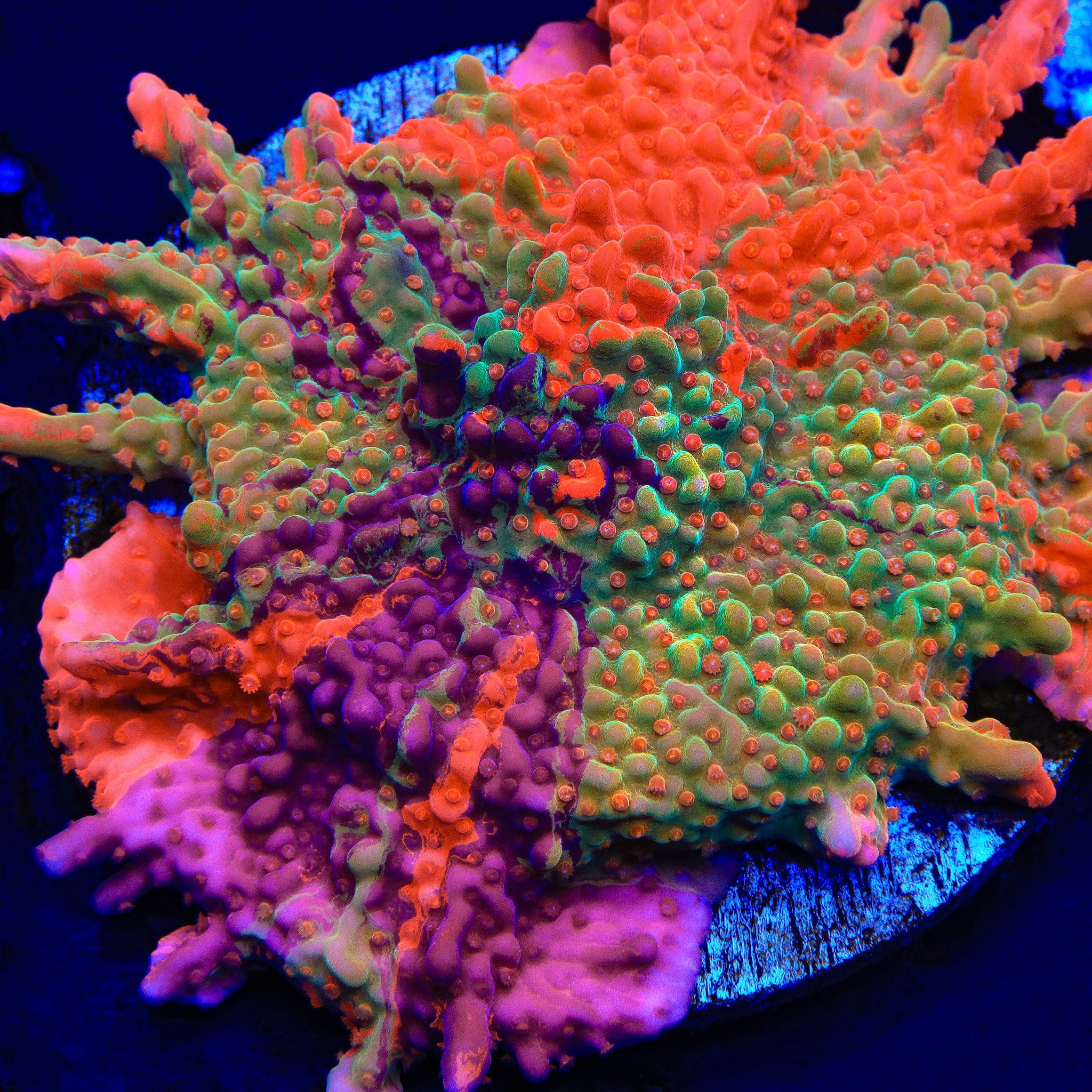
Plating Monti
Thin leaf-like plates. Delicate edges but fast growth compensates.
Setosa Monti
Hairy/fuzzy polyps give soft appearance. Encrusting to plating growth.
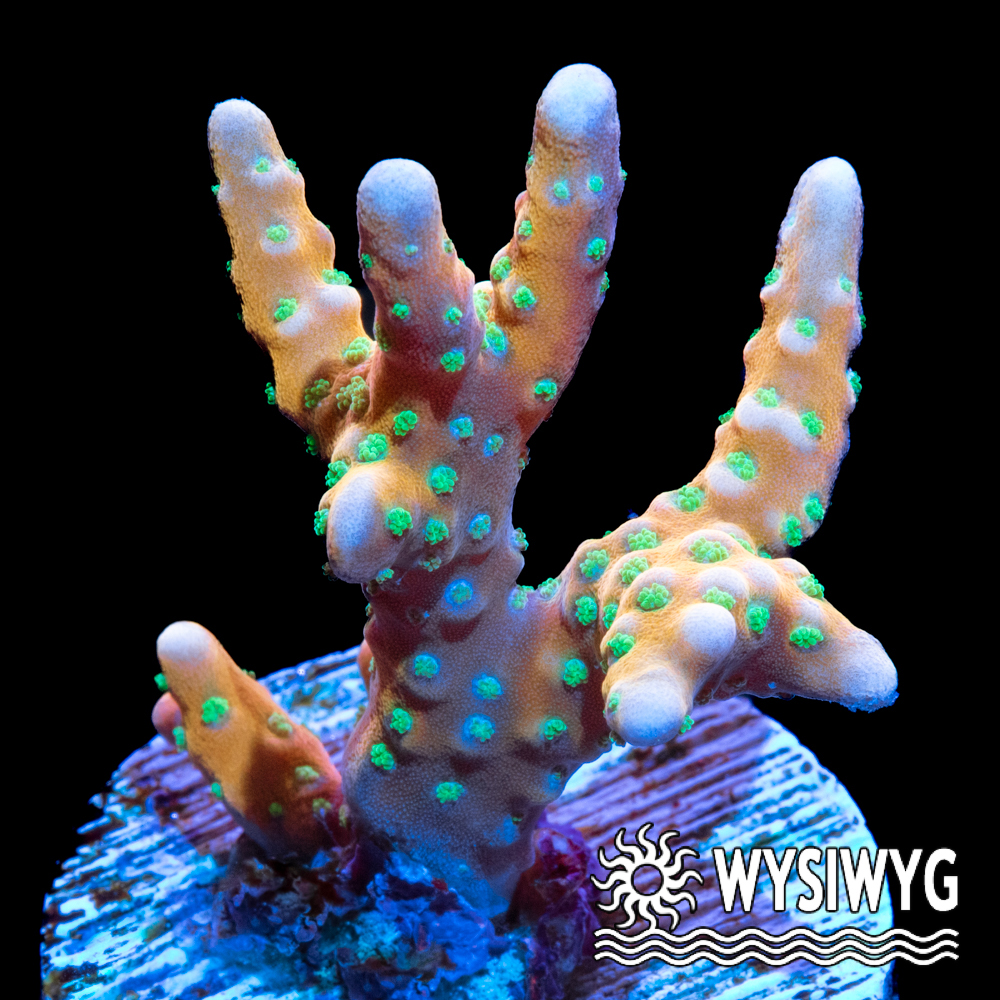
Branching Monti
Finger-like branches. Very fast growing — great for filling upper rockwork.
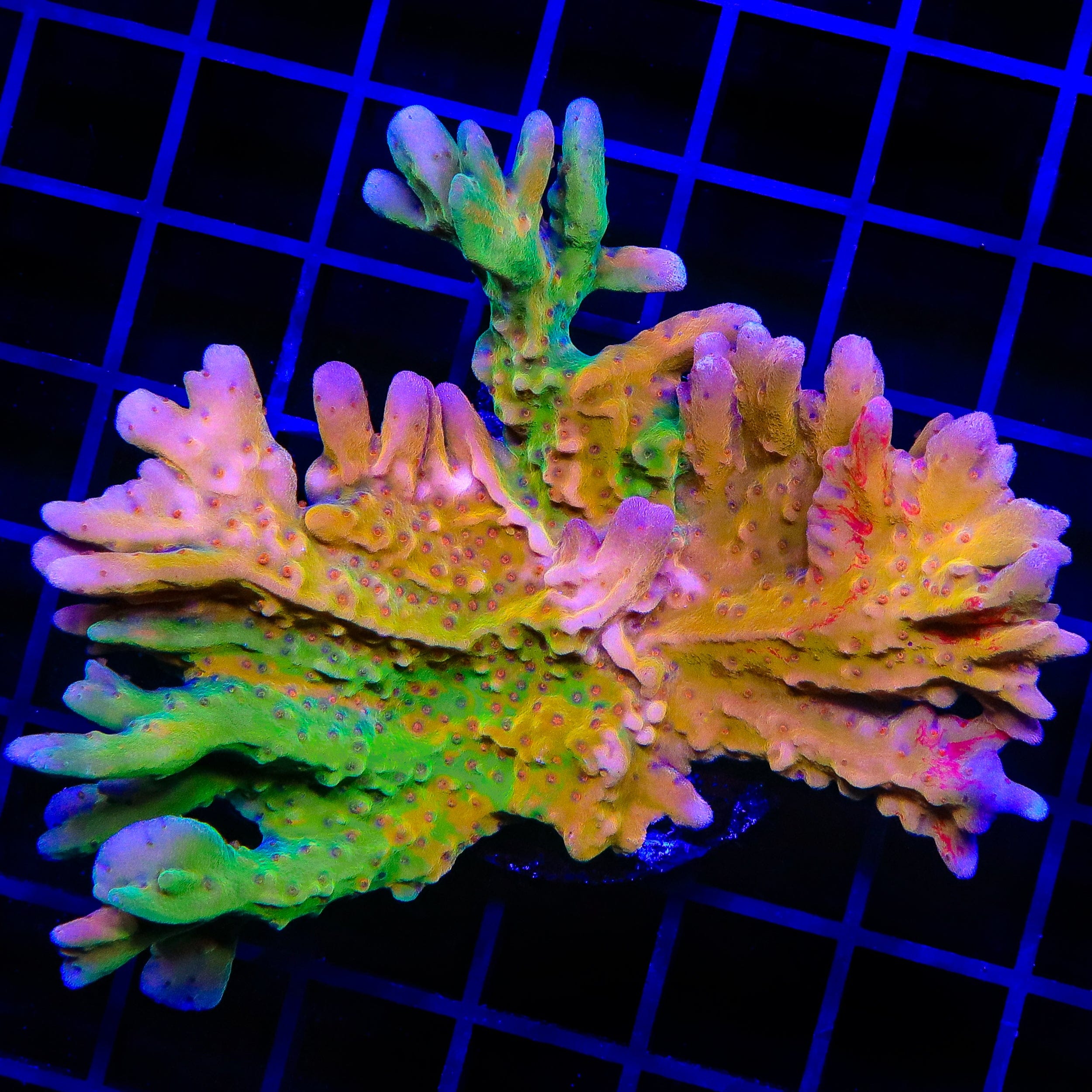
Plating Monti
Swirling plating growth. Can shade corals below — plan placement carefully.
Montipora
Beginner SPS. Encrusting, plating, or branching. Much more forgiving than Acropora.
Oregon Tort
Deep blue/purple. "Oregon Tort" morph is one of the most famous named corals.
Green Bali Slimer
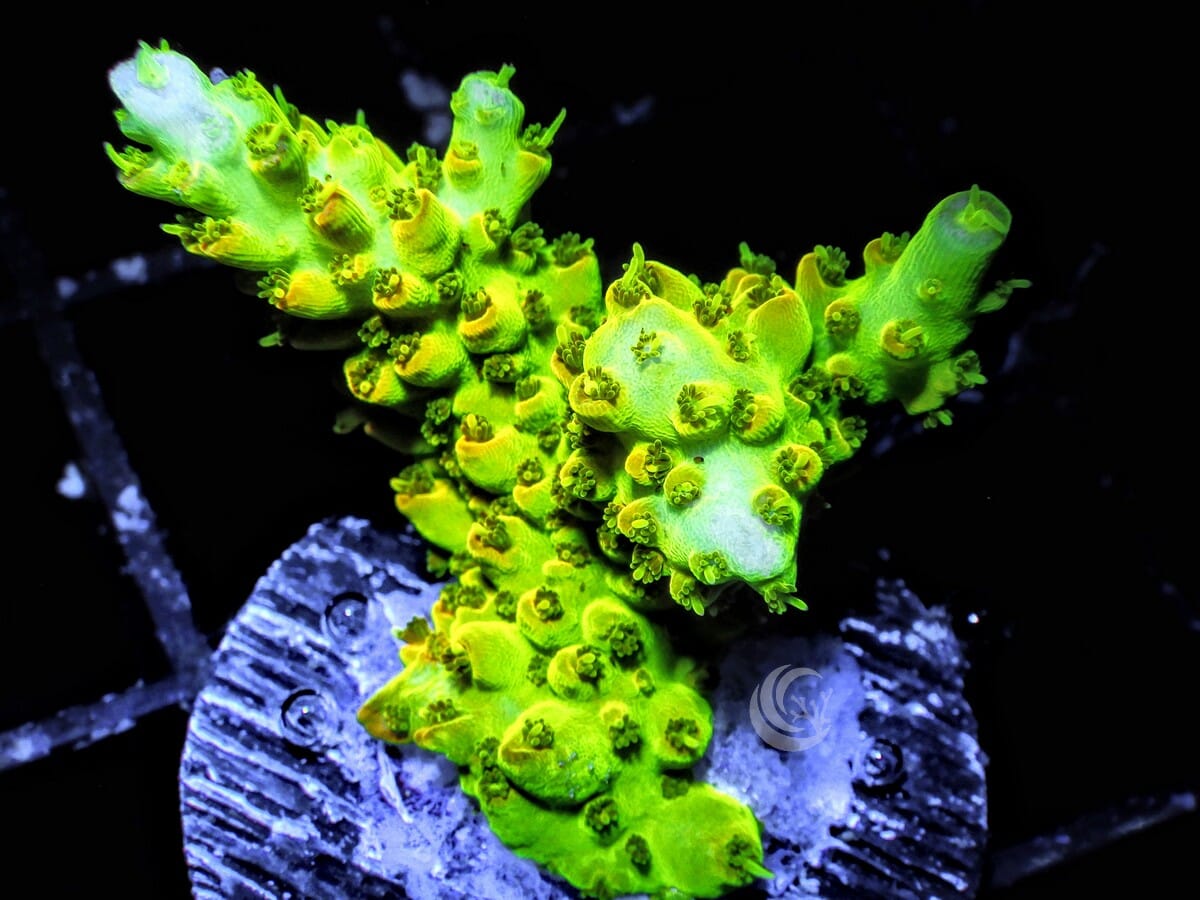
Neon green fast grower with heavy slime coat. Best beginner acro.
Tricolor Acro
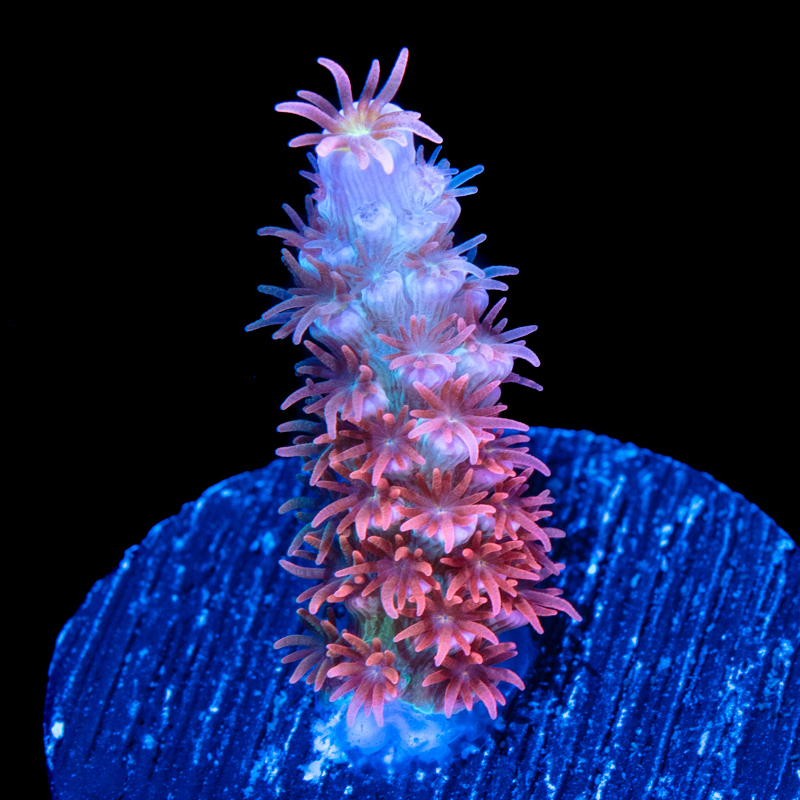
Three-tone: blue base, green body, purple tips. Iconic collector acro.
Staghorn Coral
Fast-growing staghorn. Endangered in the wild. One of the fastest acros in captivity.
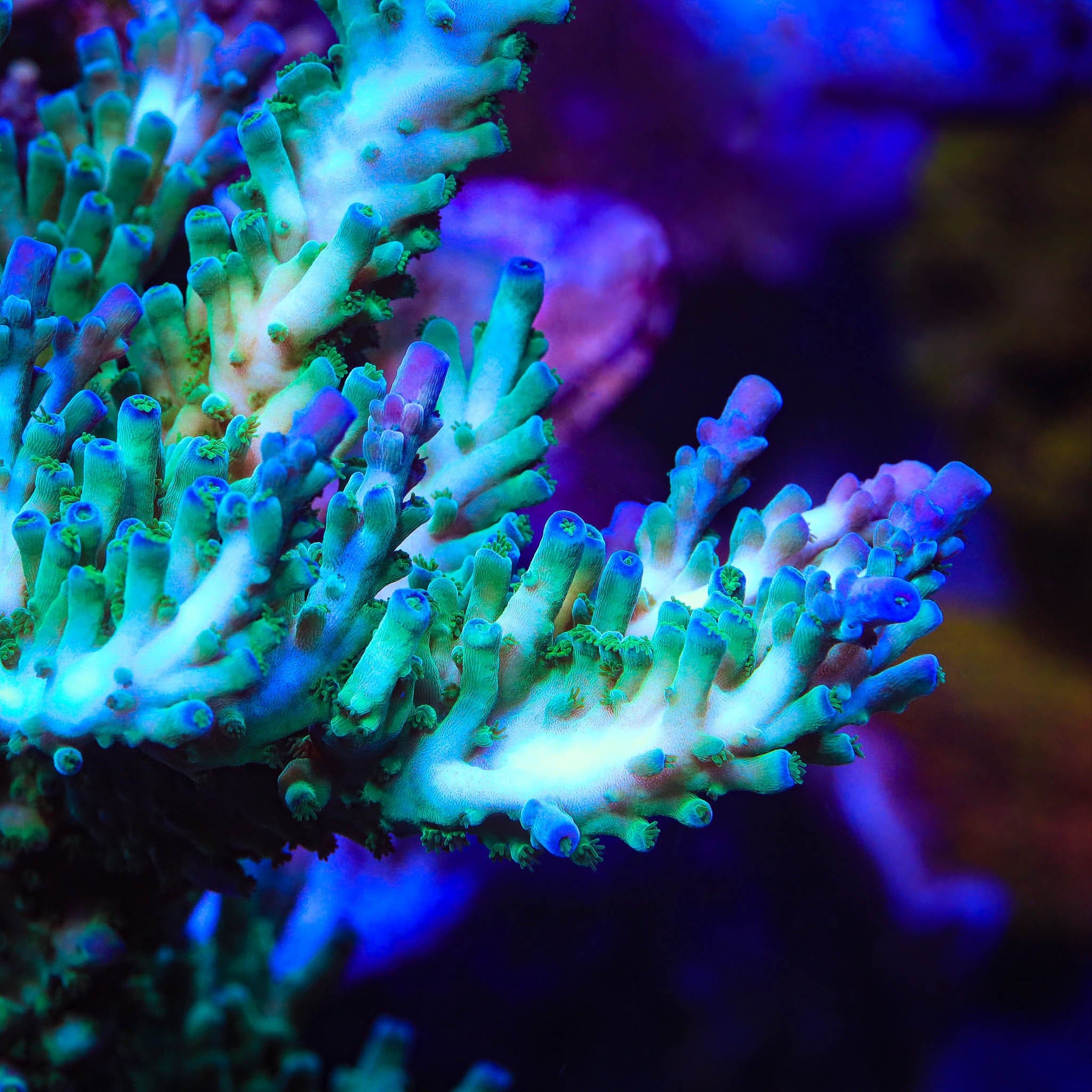
Parilis Acropora
King of SPS. Demands pristine water, high light, strong flow. Prone to STN/RTN.
Selago Acropora
Bushy branching acro. More forgiving than tenuis/millepora. Good intermediate.
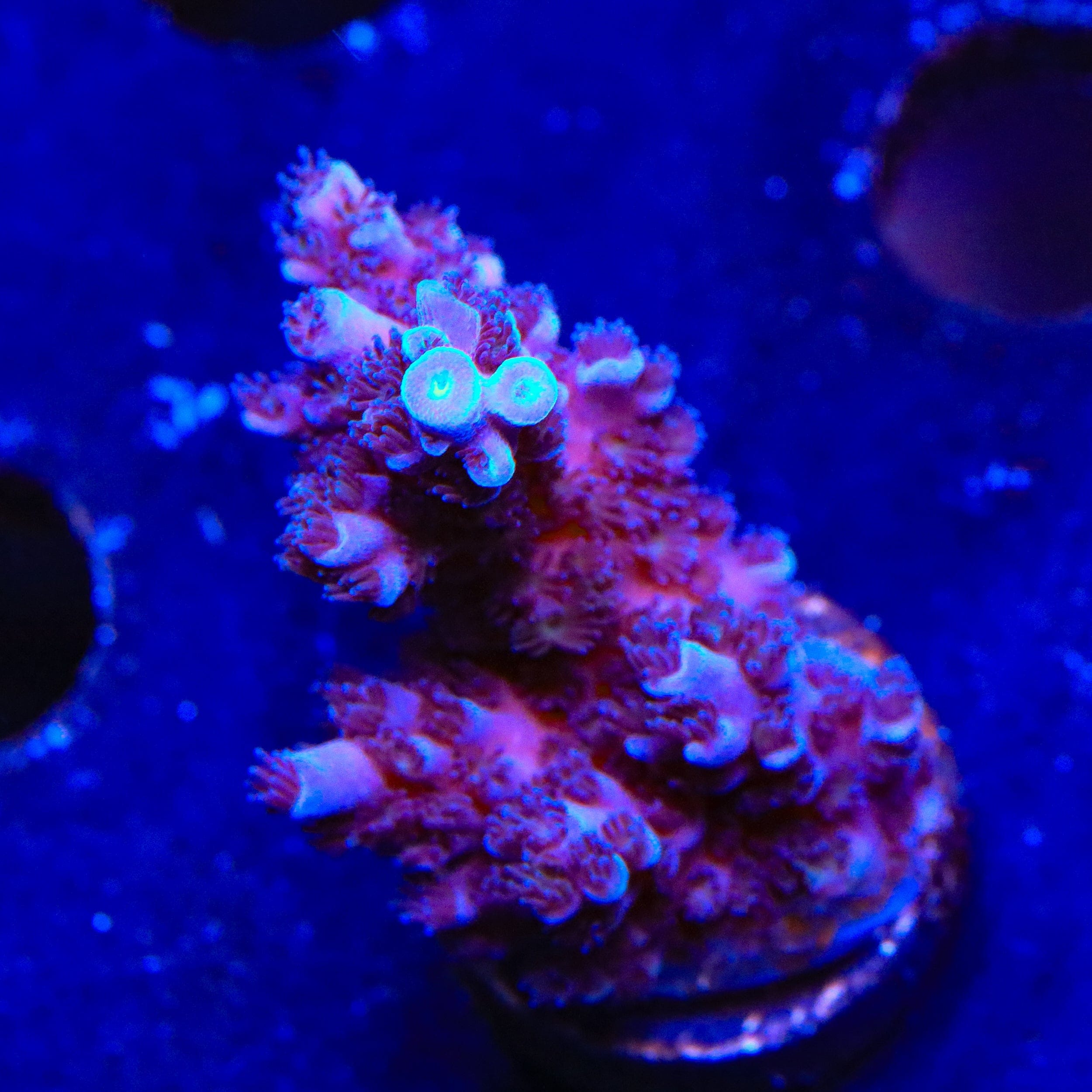
Millepora
Short fuzzy polyps, berry-tipped corallites. One of the most colourful acros.
Tenuis Acropora
Thin-branched table acro. Intense colour under high PAR. Very sensitive to alk swings.
Daisy Coral
Large-polyp alveopora. More forgiving than Goniopora — good stepping stone.
Daisy Coral
Daisy-like polyps on porous skeleton. Lighter skeleton, easier to frag.
Alveopora
Like Goniopora but 12 tentacles per polyp (vs 24). Generally hardier.